
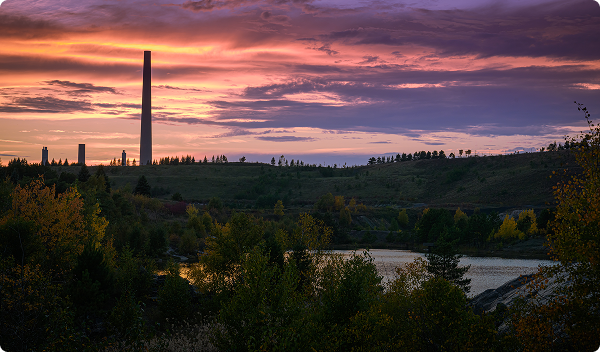
A Mining Legacy
Our Sudbury operations have been active for over 120 years, with mining commencing at the Totten Mine back in 1883.
Over time, Sudbury has evolved into one of the largest mining hubs in the world, playing a pivotal role in the global base metals industry.
About the Operation
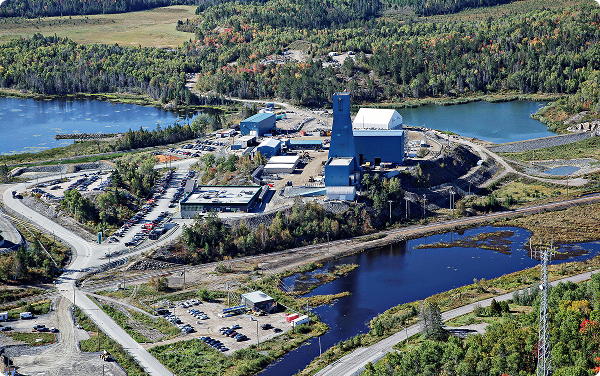
Today, our Sudbury operations encompass a robust and integrated operation allowing us to deliver the right mix of low-carbon, high purity and specialized products for our customers with the operational flexibility they require while also optimizing our end-to-end margin.
We produce a diverse portfolio of metals at our Sudbury operations including copper, nickel, cobalt, platinum group metals, gold, and silver. In Sudbury, we have one open-pit mine and operate five underground mines in addition to a mill, smelter, and refinery.
Mining Operations
Totten
- Underground Mine
- Started mining in 1883, re-opened in 2014 after being on care and maintenance since the mid-1970s.
- Deepest current mining level: 4,650 feet
Creighton
- Underground Mine
- Started mining in 1901
- Deepest mining level: 8,330 ft level
Copper Cliff Mine (South and North)
- Underground Mine
- Started mining in 1904
- Deepest mining level: 5200 feet
Garson
- Underground Mine
- Started mining in 1908
- Deepest mining level: 5330 ft level
Coleman
- Underground Mine
- Commenced production in 1970
Stobie
- Open Pit Mine
- Commenced production as an open pit nickel mine in 1890 before transitioning to underground mining in 1914 through 2017
- Resumed operations as an open mine in 2024 in partnership with Thiess and two local Indigenous businesses: Z’Gamok Construction LP, and Aki-eh Dibinwewziwin Limited Partnership
Surface Plants
Our vertically integrated Sudbury operations include milling, refining, and smelting facilities:
Clarabelle Mill
Ore from local mines is transported to Clarabelle Mill, the first stage in mine processing. Commissioned in 1971, ore size is reduced by a SAG (Semi-Autogenous Grinding) / ball mill circuit at Clarabelle to liberate valuable minerals. The minerals are converted into a copper concentrate and a nickel concentrate using a flotation process. The copper concentrate is sold to market while the nickel concentrate is delivered to the smelter complex for further processing.
Copper Cliff Smelter Complex
Commissioned in 1930, the Copper Cliff Smelter Complex uses a pyrometallurgical process to remove sulphur and iron from nickel concentrate to create a nickel matte. The sulphur dioxide is converted to sulphuric acid at an acid plant located in the complex and then sold to market. The nickel matte is delivered to the Copper Cliff Nickel Refinery for final processing.
Copper Cliff Nickel Refinery
Commissioned in 1973, nickel matte undergoes additional processing at the refinery to remove final impurities to make high-purity nickel pellets and powders that are delivered to market to support various industries that require high-nickel alloys such as the aerospace, defense, electronics, nuclear sectors.
Workforce
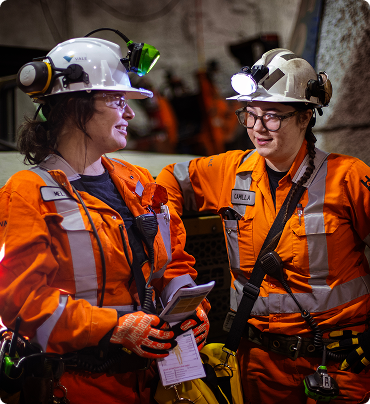
Our Sudbury operations are supported by a team of over 4,000 direct employees and more than 1,000 contractors, making it one of the largest and most dynamic mining operations in the region.
Environmental Stewardship
Environmental sustainability is a core commitment at Vale Base Metals (VBM). Our operations are internationally recognized for their leadership in emissions reductions and land reclamation.
We actively manage and monitor environmental impacts through:
Air Quality Monitoring: Regular reporting on ambient concentrations of total suspended particulates, nickel, cobalt, sulfur dioxide, and other metals.
Environmental Monitoring Team: Comprised of VBM representatives, community members, and officials from the Ontario Ministry of the Environment, Conservation and Parks. This team meets annually to review progress and ensure compliance with site-specific air standards and environmental approvals.
Community Engagement
VBM is an integral part of the fabric of the Greater Sudbury community. Many of our employees were born and raised there and are the second or third generation of their families to have worked at our operations. Our employees are known for their generosity commitment to giving back. In fact, the country’s most successful annual food drive, the Edgar Burton Christmas Food Drive, was created by a former employee for whom the campaign is named. United Steelworkers Local 6500 and VBM support the food drive each year and are also proud of their 48 years of combined support for the United Way Centraide Northeastern Ontario.
Investing back into the community comes in many forms for the Sudbury Operations, including the donation of time and expertise supporting boards and committees to providing equipment that enables hands-on learning opportunities to our local educational partners as well as financial contributions for initiatives that enhance the community.
Dismantling of the Superstack
Watch the video on the engineering process to learn more about the Superstack dismantling
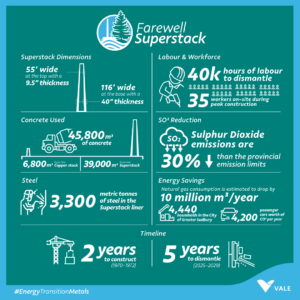
As part of our commitment to environmental stewardship, VBM is moving forward with the decommissioning of the iconic Superstack at the Copper Cliff Smelter Complex in Sudbury.
The structure, which went operational in 1972, was decommissioned in 2020 following the successful completion of the approximately $1 billion Clean Atmospheric Emissions Reduction Project, a cornerstone initiative in our ongoing, long-term environmental stewardship program for Sudbury.
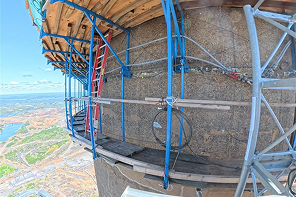
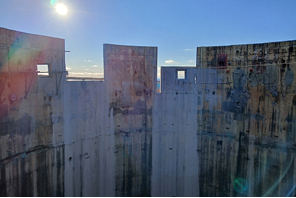
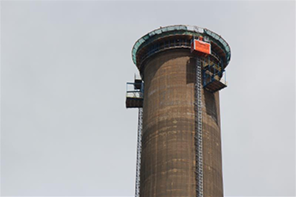
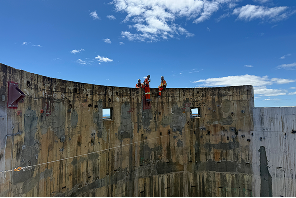
The dismantling of the Superstack began in September 2025 and will take about five years to complete. Specialized equipment has been deployed to ensure the procedure fully adheres to the established plan.
Detailed impact mitigation plans have been developed as part of the dismantling process to safeguard our operations and the local community. Dust and noise levels are being actively controlled. Monitoring devices have been installed throughout the area to provide reference data and evaluate the effectiveness of each mitigation measure. Advanced engineering techniques are being implemented to ensure the dismantling is carried out safely and efficiently, supported by a community impact mitigation plan.
We continue to welcome your input and feedback through our dedicated email: [email protected]
Updated Pictures
Check out current images of the Superstack dismantling. Check back for more updates on its progress.
FAQs
When will the superstack come down?
Since 2020 the superstack has been inactive but work on preparing it for dismantling has not stopped. Careful study and design work was needed to ensure the dismantling was safe for the community and our employees working in the smelter complex. Time was spent slowly cleaning the stack’s interior, removing the steel liner and sealing or removing accessory structures in preparation for a future dismantling of the shell.
We are currently evaluating the approach to its dismantling, and we will keep the community informed as our plans develop.
We want to hear from you!
Contact VBM’s Community Concerns Line at 705-222-VALE (8253), offering 24-hour service, seven days of the week.
To reach our offices for all other requests, please call 705-682-4211 or email us at [email protected].
Downloads
Environmental Policy Statement
Spanish & Vermilion Rivers Water Management Plan
VBM Copper Cliff Mine Blasting Fact Sheet
Drinking Water Quality Management System (QMS)
Environmental Emergency Response Plan (E2 Plan) Copper Cliff Nickel Refinery
Environmental Emergency Response Plan (E2 Plan) Copper Cliff Smelter Complex
EPW – Sudbury 2025
2025 VBM Ontario Operations – Annual Implementation Summary Table
Sudbury’s SO₂ Air Quality Monitoring Network
Smelter Complex Nickel Site-Specific Standard